Best Food in Rome
During our two-week trip to Italy, Rome hands down had the best food, especially when it came to pasta. Every meal felt simple but intentional, and when it was done right… wow. Below are the best restaurants we ate at, must-try dishes, a pasta cooking class I loved, and important tips to avoid tourist traps while dining in Rome.
Best Restaurants in Rome Worth Visiting
If you only add a couple of restaurants to your Rome itinerary, make it these. Especially Osteria da Fortunata, truly unforgettable.
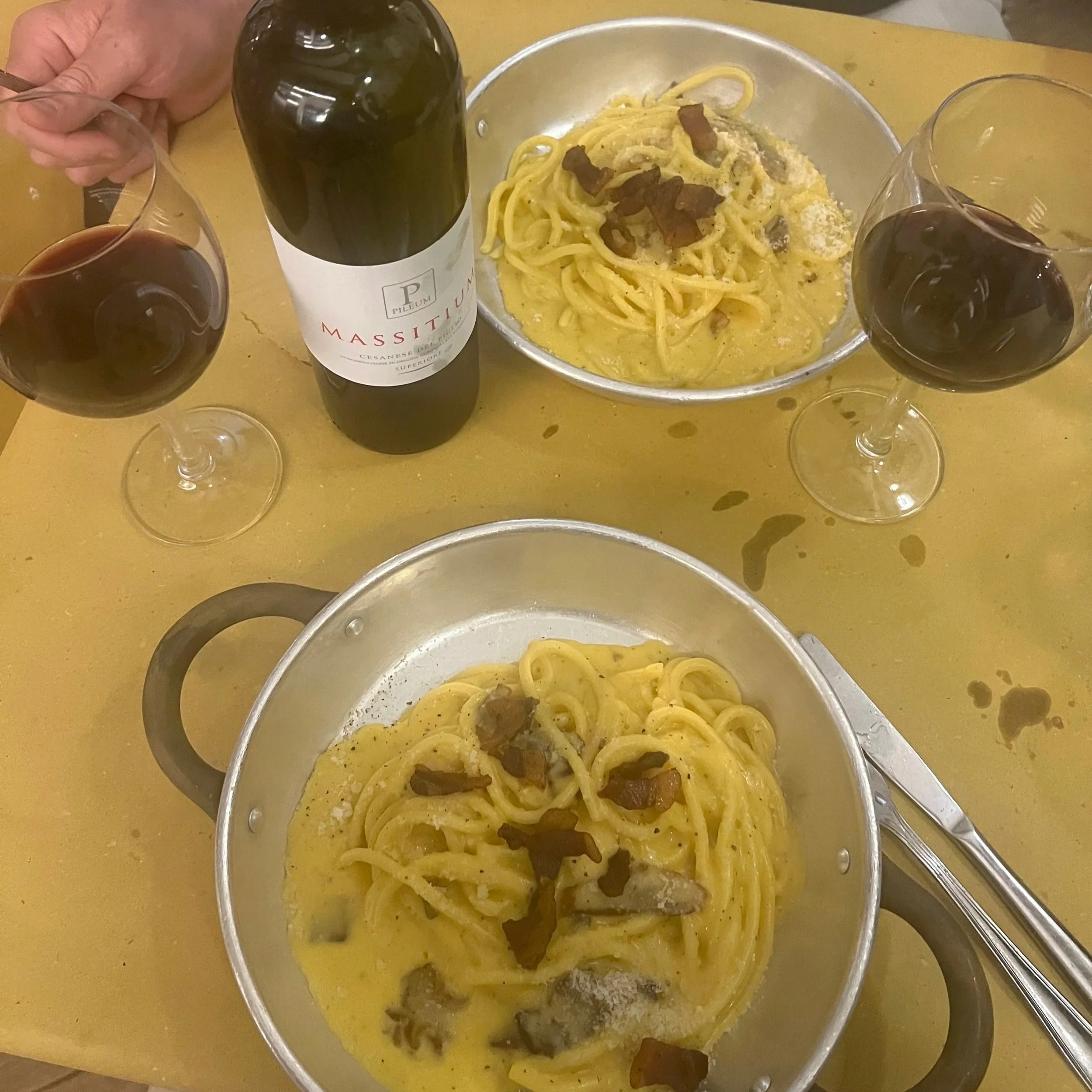
Pasta e Vino Osteria
This restaurant came highly recommended by our Airbnb host and ended up being our very first meal in Rome, which set the bar high. Located in the charming neighborhood of Trastevere, Pasta e Vino Osteria looks like a tiny hole-in-the-wall from the outside, but inside it’s cozy, romantic, and full of character.
There’s even a nonna making fresh pasta in the window, which immediately lets you know you’re in the right place. Everything we ordered was incredible, and I’d absolutely go back. Such a special first Rome meal.
Osteria Da Fortunata
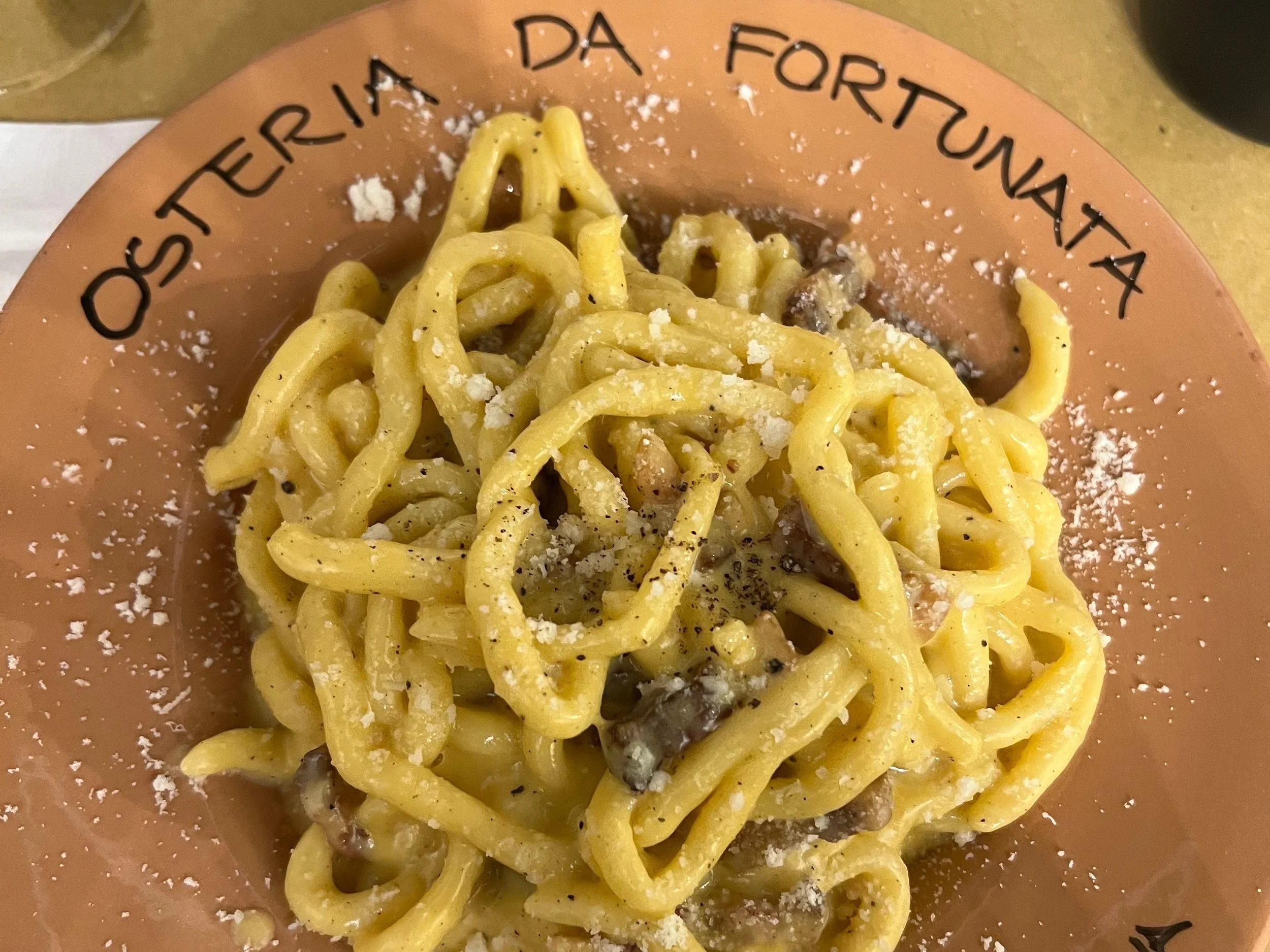
This spot is more popular online and does usually come with a wait, but it is 100% worth it. We had some of the best pasta we’ve ever eaten here, and their carbonara was unreal.
My tip: go before you’re starving so the wait doesn’t feel painful. The line moved fairly quickly for us, and once you taste the food, you’ll forget you waited at all.
Quelli De Coronari
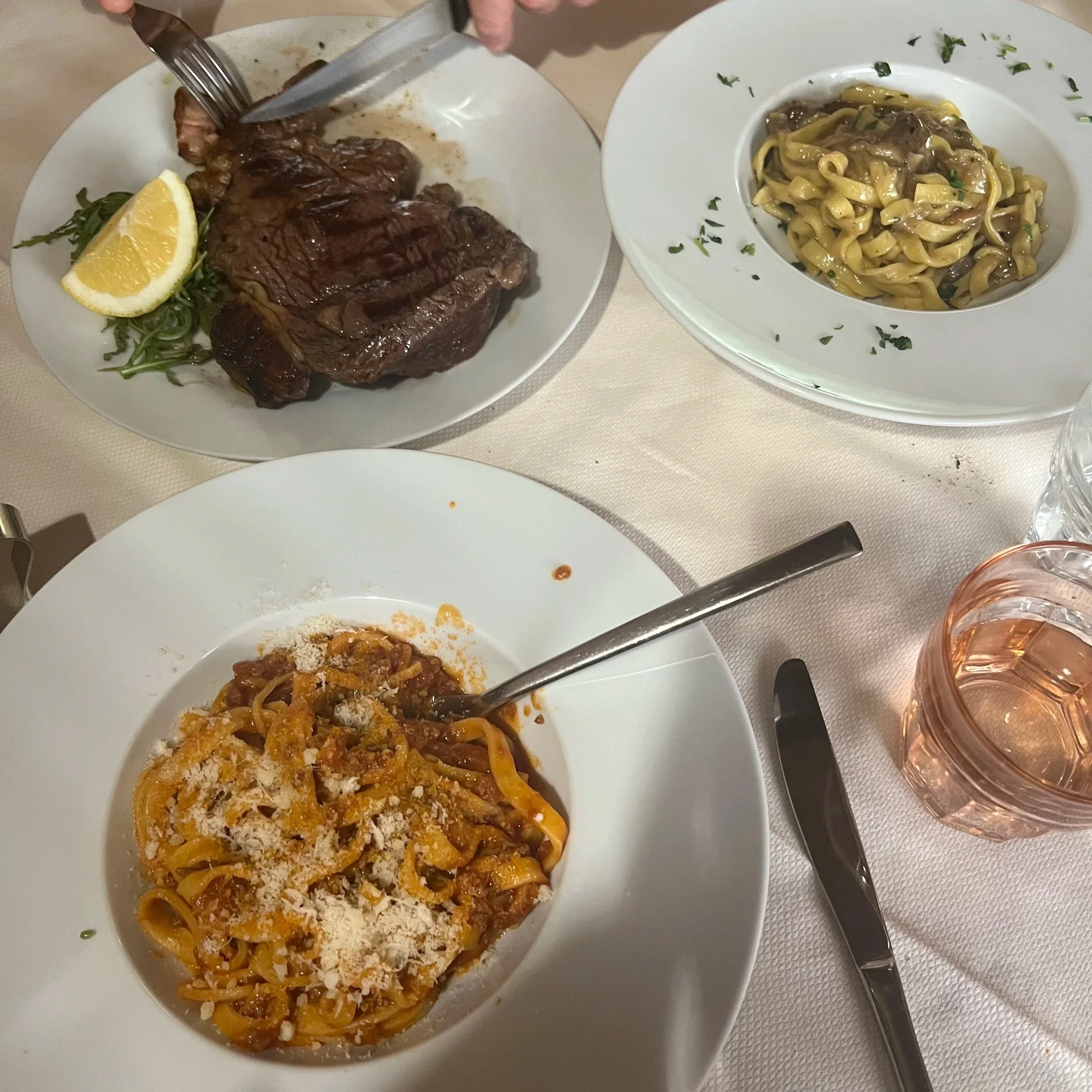
This restaurant was close to where we were staying, tucked away on a quiet, local street, which we loved. It definitely felt like more of a neighborhood spot. The pasta was excellent, and they also had really good steak.
The only downside? Getting the check took forever, but honestly, that’s pretty normal in Italy. Dining here is an experience, and you could easily spend 2–3 hours at the table. If you’re not in a rush, it’s a great place to slow down and enjoy.
Best Gelato in Rome
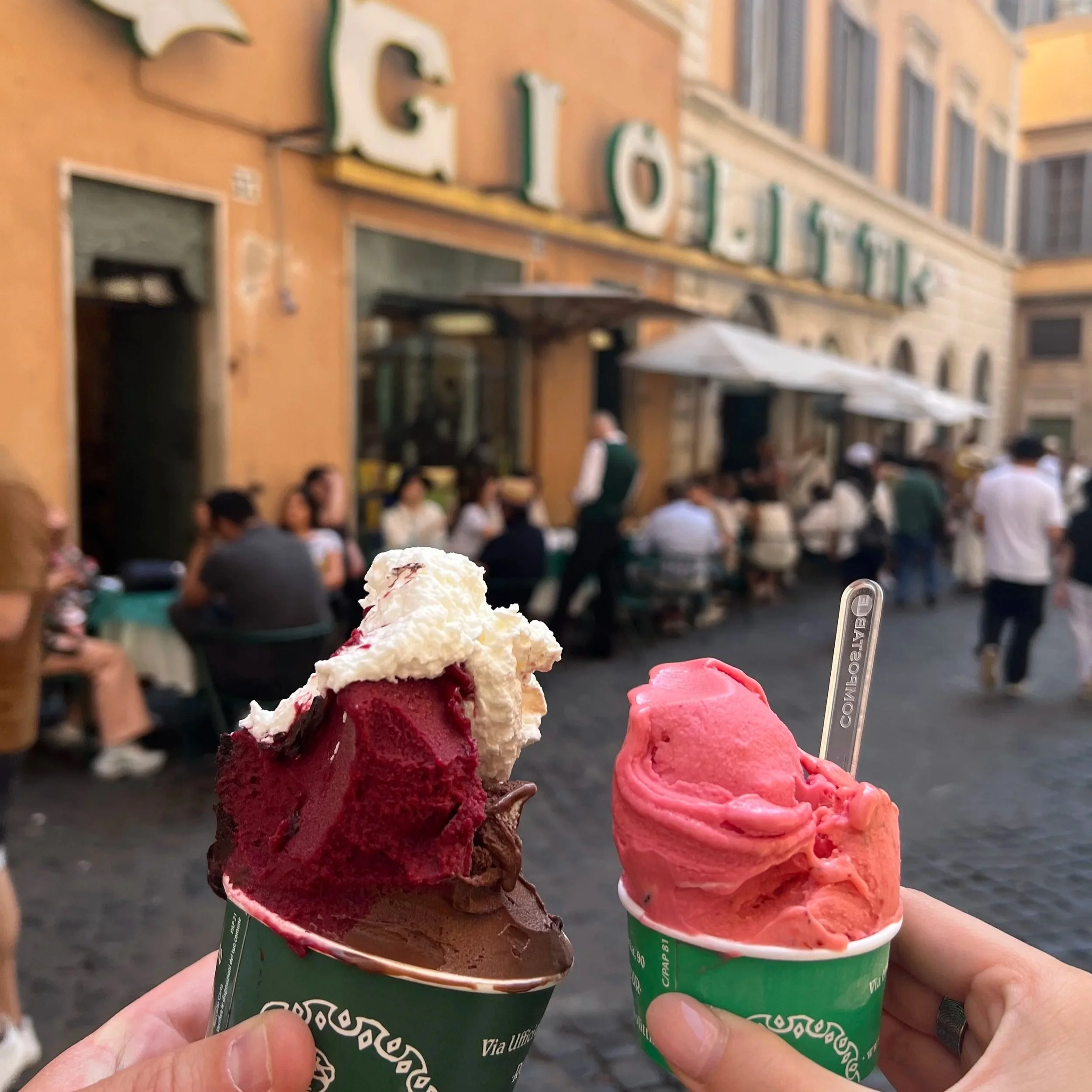
Giolitti had some of the best gelato we had in all of Italy, and that’s saying something. They have a ton of flavors, and it’s absolutely worth stopping here. There are also several good gelato shops nearby if the line is long.
Gelato tip: Avoid places with huge, overflowing mountains of gelato or super bright, neon colors. Authentic gelato usually looks more muted and matches the natural color of the flavor. That’s how you know it’s made with real ingredients and not a bunch of added stuff.
Foods to Try in Rome
Carbonara is a classic Roman dish, so you have to try it here. Traditional carbonara is made with egg yolks, black pepper, pecorino cheese, and guanciale (pork cheek), no cream. When it’s done right, it’s rich, simple, and absolutely delicious.
Tiramisu is a staple Italian dessert and one you should be ordering often. And when I say often… I mean every day, sometimes multiple times a day. Between tiramisu and gelato, we were very consistent.
Arancini are a popular street food you’ll see throughout Italy, though they’re more rooted in Sicilian cuisine. They’re deep-fried rice balls, usually stuffed with cheese and sometimes meat sauce, crispy on the outside and comforting on the inside. So good for a quick bite.
Pasta Cooking Class
There’s truly no better place than Rome to take a pasta cooking class. It’s such a fun activity, you get an amazing meal out of it, and you actually learn a real skill.
I loved our class and now genuinely make fresh pasta from scratch at home all the time. If you enjoy food and hands-on experiences, I can’t recommend this enough.

Tips for Dining in Rome (Avoid Tourist Traps!)
My biggest tip for dining in Rome, and Italy in general, is to avoid restaurants where people are standing outside trying to convince you to come in. These are almost always tourist traps.
Also, be cautious if the menu feels overly familiar. Dishes like fettuccine Alfredo are more of an American thing. Authentic Italian menus are often simple, regional, and sometimes hard to fully understand, which is usually a good sign. If the ingredients look minimal and straightforward, you’re probably about to eat very well.
Another thing we noticed: many local, traditional restaurants had thin white paper covering the tables. It’s a small detail, but if you see it, chances are you’ve found an authentic spot.
Tipping in Italy
Unlike in the U.S., tipping isn’t expected in Italy. Servers are paid fairly, and you’re not expected to tip. That said, if you have great service and want to leave a little extra, it’s appreciated, just not necessary.
Waiting for the Check
Dining in Italy is meant to be an experience. Meals are slow, relaxed, and focused on connection. People often sit at the table for 2–3 hours, and no one is rushing you out.
I actually love this part of the culture, it’s very present and intentional. But when you’re visiting a busy city like Rome and have places to be, it’s important to budget extra time for meals.
If you’re in a rush, my biggest tip is to ask for the check when your food arrives. It may feel a little awkward, but sometimes it’s necessary when you’re on a tight schedule.
What Time Do Italians Have Dinner?
Italians usually eat later in the evening, anywhere from 8-10pm. Which is very different from the American norm where most people are eating somewhere between 6-7pm. During peak Italian dinner times that’s when restaurants start to get packed. So keep this in mind when making reservations and planning dinners. Also, restaurants usually close after lunch time for a few hours and open back up around 6pm.